



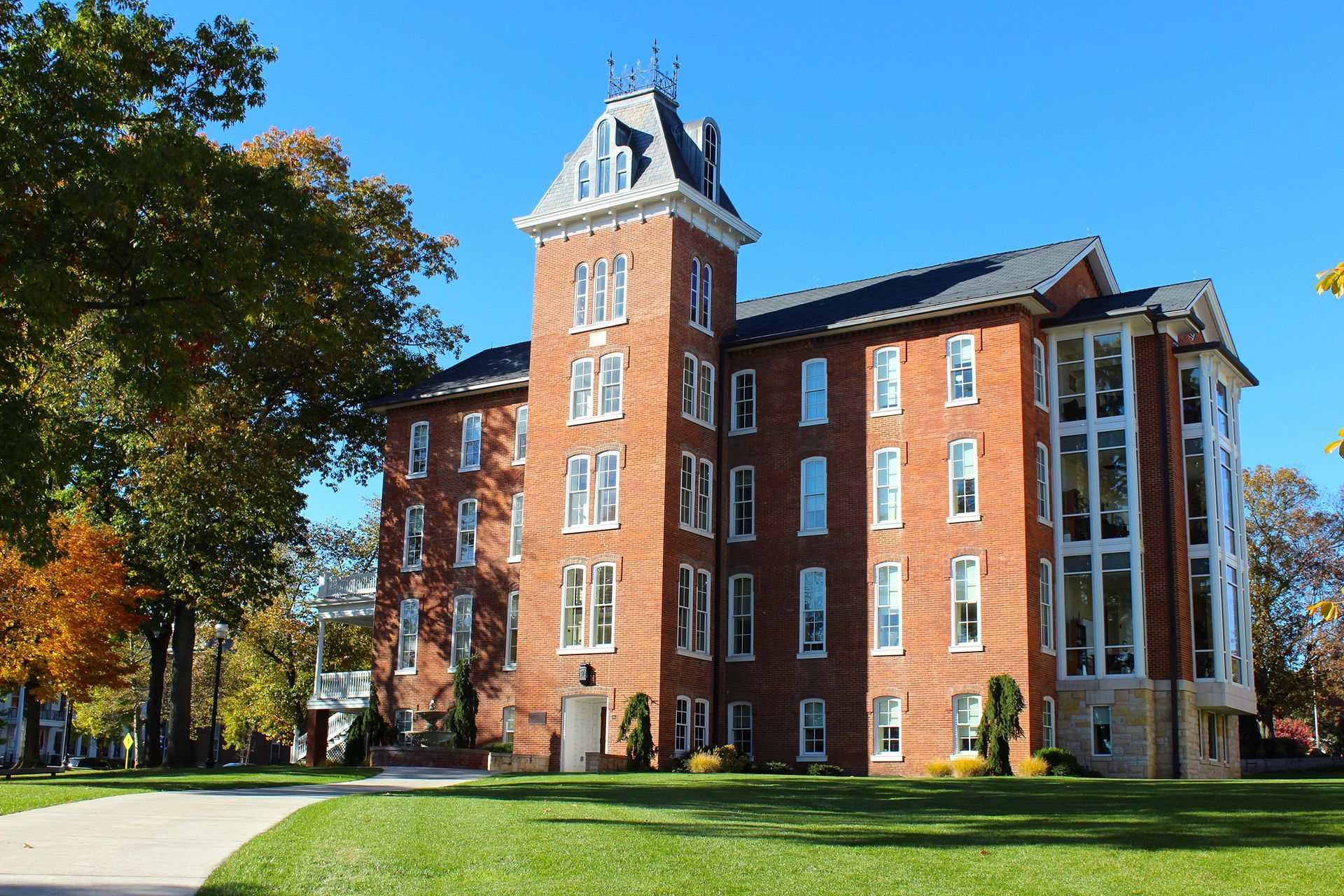

Last year's top CUPPIE honor, selected from 405 submissions, went to the launch video for the Edelman Fossil Park & Museum of Rowan University , created in partnership with Narrative Media. The film captures the wonder of a place where children can encounter science firsthand, researchers can continue to make discoveries, and Rowan can tell a larger story about its ambitions as an institution. As CUPRAP prepares to open this year's CUPPIE Award season, we asked the team behind last year's Best of Show to take us behind the scenes—and share what made both the work and the partnership successful. What story did you most want audiences to take away from the museum? For Narrative Media, the starting point was a simple question: Why should people care? The answer was both emotional and strategic. The team wanted to capture the excitement of young people encountering science and discovery while also conveying what the Fossil Park represents for Rowan: a distinctive destination that can attract visitors, scholars and supporters, and contribute to the University's broader aspirations. "Our visuals of kids excitedly exploring the museum helped to tell that story," said Andrew Poag of Narrative Media. Knowing the audience also helped determine how much of the story to tell. Rather than diving deeply into the science, the team sought to "pique their curiosity, whet their appetite, and leave them with just enough information to get them interested in visiting for themselves." What made the client-agency partnership work? Ask both sides, and the answers sound remarkably similar: time, trust, and a willingness to push each other. Narrative Media and Rowan have worked together for more than a decade. From Rowan's perspective, that history means Narrative understands not just the institution's goals, but its voice and culture. "[Andrew] has learned about the institution with each assignment and helped us develop a video storytelling style and voice that fits Rowan well," Joe Cardona, vice chancellor for University Communication at Rowan shared. "In planning stages, he listens well and returns to us with creative options that we can run with." For Poag, that history has created room to take creative risks. "When we first started working together, our projects were of a more limited scope, but as the relationship grew Rowan was more willing to take some risks and try things that we and they hadn't done before," he said. The result has been increasingly ambitious work—and a partnership in which both sides feel invested in the outcome. What should institutions look for in a creative partner—and vice versa? Rowan's advice is to find partners who respect the expertise that already exists within an institution but aren't afraid to challenge it. "We look for creative pros who've done their homework and respect our knowledge but still know how and where to push us out of our comfort zone to do something we couldn't have imagined," Marshall said. Poag offers similar advice to clients: make room for new ideas. "If you can let go of a little bit of control and allow room for fresh perspectives, it can do wonders for your work." He also cautions against underestimating the time and resources required to make work stand out. Preparation, production and polish all matter—particularly in a media environment overflowing with content. What's one lesson you'll take from the project? For Poag, it's the value of time—especially time that creates room for the unexpected. The production devoted a full day to filming children and families in the museum. That allowed the team to carefully capture what they had planned, but it also created room to experiment. One memorable shot through a dinosaur's mouth toward a family below wasn't on the original shot list. With time to play with the idea, the crew grabbed a ladder and made it happen. And one of the most meaningful outcomes wasn't captured on camera at all. After the shoot, Jarell, a young boy featured handling dinosaur bones and running up the museum stairs, sent Poag a letter thanking him and telling him how much fun he'd had. Poag wrote back, beginning a correspondence between the two. "It was incredibly heartwarming to find out that we made his time with us a positive experience," Poag said. "His letter was the best reward for this project." The CUPPIE was a pretty good one, too. Information about the 2027 CUPPIE Awards and the entry process will be made available in late September 2026.
May 12, 2026 Carina Sitkus, Associate Vice President, Content, Lehigh University Audra Berner, Executive Director of Content Distribution, Lehigh University Kristen DiPrinzio, Director of University Communications, Lehigh University Lindsay Lebresco, Executive Director of Content Creation, Lehigh University Launching a brand is a pivotal moment for any institution—but the real work begins when teams across campus bring that brand to life consistently and collaboratively. For our content team within University Communications and Public Affairs at Lehigh University, that meant developing a content strategy in alignment with Lehigh’s new brand that could unite more than 100 communicators and marketers around a shared approach to storytelling. A core part of that strategy was the introduction of annual content themes: strategic story lenses designed to guide narrative priorities across the university. These themes help ensure our audiences walk away with the understanding of who Lehigh is and what differentiates us, while giving creators across campus a common framework to work from. Below are the key considerations incorporated into the strategy we created and the lessons we believe other institutions can apply to their own work. 1. Framing the Strategy: Creating a Shared Narrative Framework Why Themes Became the Foundation We developed a set of annual themes designed to flex with emerging institutional priorities, key initiatives, and societal conversations. They are refreshed every year. Together with our brand pillars, which are evergreen and speak to topics such as academic excellence and student success, these themes (contact communications@lehigh.edu for the annual themes) keep our storytelling aligned across the university while still allowing for creative variation and timely content. Building Governance That Could Scale To make the strategy operational, we knew governance had to be built in from the start. Our approach included: Cross-functional planning groups between central communications and advancement Regular collaborative meetings with colleges and key offices A two-way system for content sharing and amplification A shared vocabulary that allows teams to quickly align on audience, purpose, and thematic fit The result is a repeatable process where content creators and strategic leaders can decide together: What story should we tell? Who should tell it? And for which audience? For institutions with decentralized communications teams, this type of structure is essential. It provides clarity without limiting creativity, and it ensures that the symphony of storytelling across the university is aligned and can scale into institutional impact. 2. Using Analytics to Inform Decisions and Improve Outcomes Building Our First Thematic Analytics Framework One of the biggest challenges in higher ed content strategy is connecting strategic intent with real performance data. To address this, we implemented a new analytics framework that ties every piece of content to its associated theme and/or brand pillar. This allows us to measure: Volume of content produced per theme/pillar Views, engaged sessions, and engagement rate Comparative performance between themed content and all content Which themes/pillars resonate most strongly with audiences Gaps where strategy and content output aren’t yet aligned Key Insights From Our First Benchmark Year Several insights emerged that changed how we think about content alignment: High-performing stories often aligned with brand pillars, even when they weren’t intentionally crafted with strategy in mind. Only a fraction of stories aligned with annual themes—an indicator that editorial habits take time to evolve. Some stories performed exceptionally well because of SEO and topical relevance rather than strategic alignment—reinforcing the need for early integration of search strategy. Analytics surfaced opportunities to standardize tagging across decentralized websites so performance data can be aggregated more effectively. For others building a content strategy, your first year of analytics isn’t about perfection; it’s about building a baseline that allows for smarter decisions next year. 3. Opening the Strategy to the Full MarComm Community A University-Wide Co-Creation Model Once the initial governance structures were in place, we expanded theme development into a university-wide collaborative process. We began with a seed set of ideas from our central content team, then invited communicators across admissions, colleges, advancement, and other units to submit their own theme concepts. A cross-functional leadership group synthesized these submissions and moved forward a refined set of themes for broader input and selection. This process had two goals: Shared ownership: ensuring this was the university’s content strategy, not just one office’s. Collective clarity: enabling communicators to see how their work fits into a larger narrative. 4. Lessons Learned: What Others Can Apply to Their Strategy Work 1. Governance is the unsung hero of strategic storytelling. Without a shared structure, even the best strategy struggles to take hold. 2. Analytics must evolve with the strategy. Your first year of measurement won’t answer every question, but it will illuminate the right next questions and guide future actions. 3. Co-creation builds commitment. When communicators across the institution help define the strategy, they naturally help implement and advance it. 4. Themes are guides, not constraints; they are intentionally flexible umbrellas designed to encompass a wide range of topics that reflect institutional priorities. The goal isn’t uniformity, but clarity: themes provide direction to creators while still allowing room for creativity and innovation. 5. Distribution is as strategic as creation. A strong story with weak distribution rarely achieves institutional impact. Teams must think end-to-end. The success of a content strategy is not defined by its documents, frameworks, or dashboards—it’s defined by how well people across an institution can activate it together. For us, building our content strategy from scratch was as much a culture project as it was a content project. The frameworks, governance, and analytics helped. But the real momentum came from inviting our full communications community into the process and empowering them to shape the storytelling future of the institution. For institutions looking to build or refine their content strategy, our encouragement is simple: Start with alignment, build structures that last, and trust your community to bring the strategy to life.
March 20, 2026 Franklin & Marshall College student Sekou Cherif ’26 was named the 2026 CUPRAP Student Catalyst Fellow, a recognition of exceptional promise by an undergraduate in writing, social media engagement, video and audio production, graphic design, journalism, and related fields. Cherif, a film and media arts major and economics minor, was praised for his creative portfolio, with particular attention received for short films he created in his F&M coursework and for Drama Club NYC, a nonprofit focused on improv programming for formerly incarcerated youth. He is the first F&M student to receive the award in the organization’s 46-year history. He was honored at CUPRAP’s annual conference, held in F&M’s home city of Lancaster, March 11-13. “ When I received [the fellowship], I thought it’d be a great opportunity to engage with professionals,” said Cherif, reflecting on the news he was selected as this year’s fellow and that he’d be attending the conference. “It came at a fitting time, as a senior looking at prospective careers. It’s a great position to be in, because now I have all these new connections from colleges and different marketing agencies.” Keep reading.